THE GREEN HERITAGE OF BROEKHUIZEN
An analysis about power, landscape, and heritage from the past to today
Master course final exam | Vrije Universiteit Amsterdam | 2025
Country estates are so picturesque we rarely stop to ask what they're actually for. This project looks at Landgoed Broekhuizen, a historic estate near Leersum, and asks what its landscape reveals about how the Dutch elite imagined nature, status, and their place in it — and how that same landscape is managed today.
Rebuilt from 1793 by the Van Nellesteyn family, Broekhuizen carries two centuries of design ideals in its grounds, from the strict geometry of its Baroque avenue to the curated wilderness of its English-style park. Drawing on historical maps, archival prints, aerial photography, and an interview with the estate's current gardener, this research traces how the landscape was shaped, whose labor kept it alive, and what it means for an estate like this to survive today — as heritage, as a business, and as a landscape now facing the pressures of climate change.
RESEARCH QUESTION
How did Dutch elite’s ideals of nature shape the landscape in the past and how are these reflected and managed in today’s uses of Landgoed Broekhuizen?
Power, Landscape, and Heritage
On the southern edge of the Utrechtse Heuvelrug, a ribbon of country estates known as the Stichtse Lustwarande still shapes the landscape today — built by Amsterdam's elite as retreats from the city, and still legible in the land centuries later. This project looks at one of them, Landgoed Broekhuizen in Leersum, asking how the ideals of its 18th- and 19th-century owners shaped the landscape, and how those ideals are managed, preserved, and challenged today.
From the 1820s onward, Amsterdam's wealthy bought up the cheap, sandy lands of the Heuvelrug once the crown sold them off — building nearly 50 new estates within a century. Better roads, railways, and tram lines made these retreats easy to reach, and owning one became a mark of status as much as a place to relax. Broekhuizen, first built as a medieval knight's court, was rebuilt from 1793 into the estate that survives today: a Neoclassical house set in one of the country's earliest examples of the English landscape style.
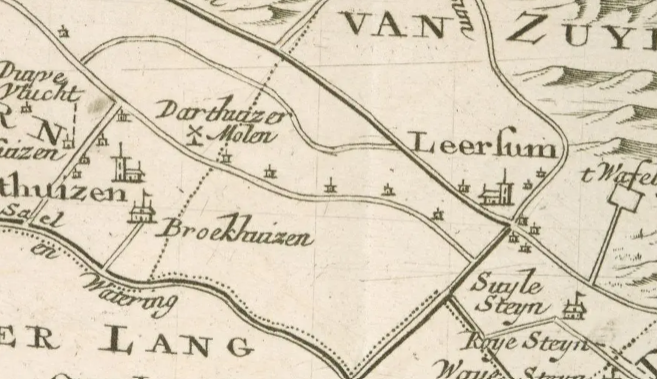
Map close-up of Broekhuizen in 1725 ©TOP25 | topotijdreis
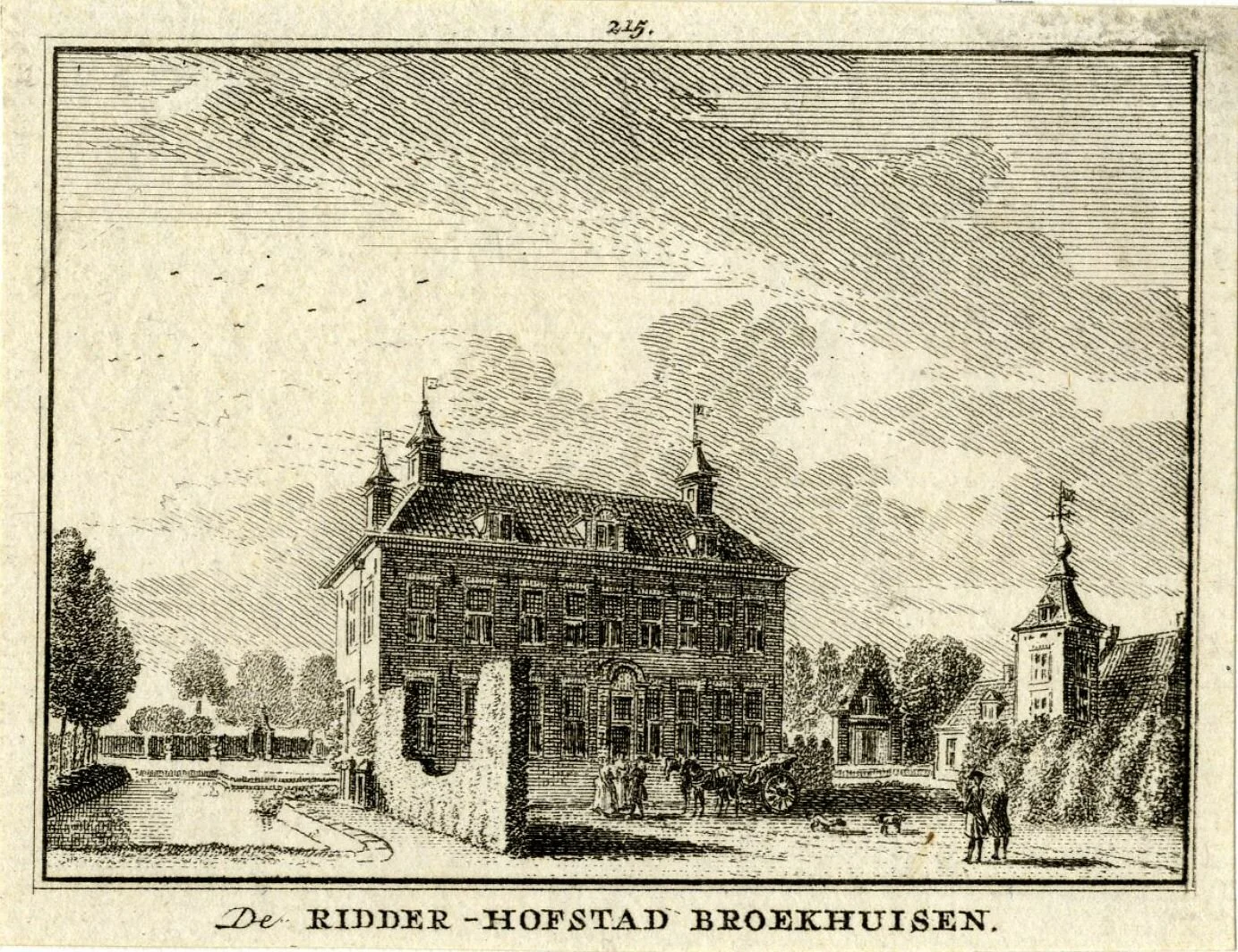
The Knight-Court of Broekhuizen in 1746. Copper engraving by Hendrik Spilman, 1744 | Archiven.nl
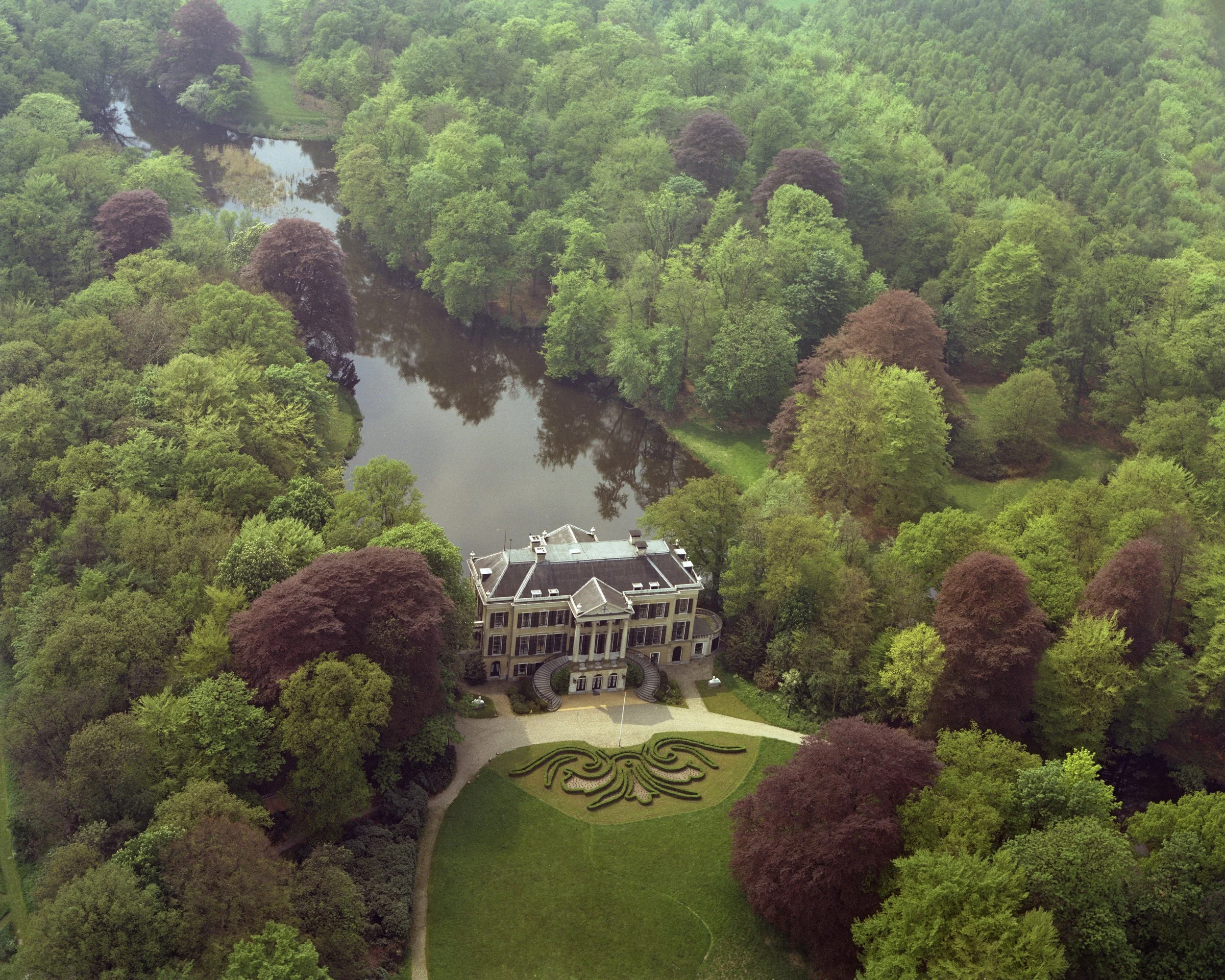
Broekhuizen country estate in 1985. ©Het Utrechts Archief
GARDEN’S FASHION
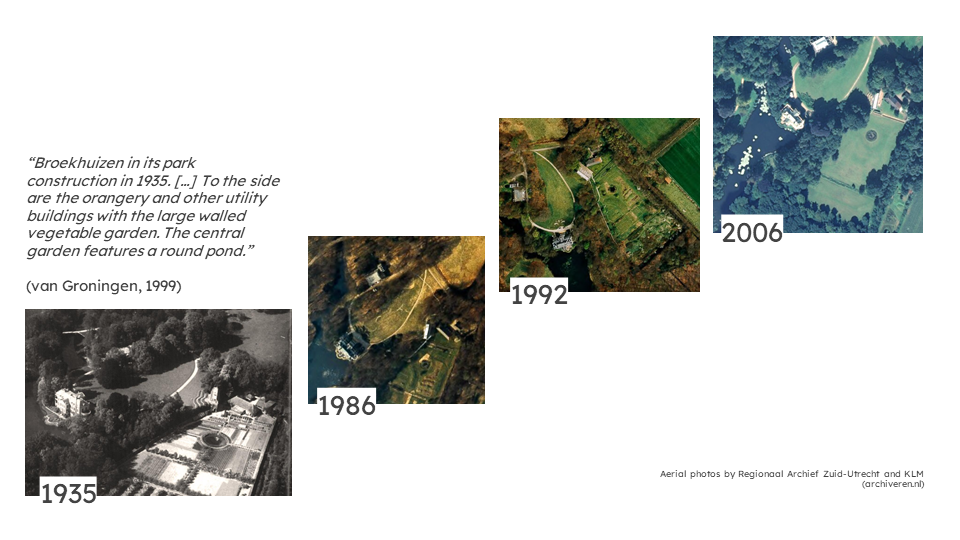
Broekhuizen's park carries traces of two very different design philosophies. Its original Baroque layout — the long straight avenue still known as Broekhuizerlaan — imposed order and symmetry on the land, a visual statement of the owner's control over nature. The estate's kitchen garden, modeled on the Potager du Roi at Versailles, follows the same geometric logic, with beds radiating from a central pond like sun rays.
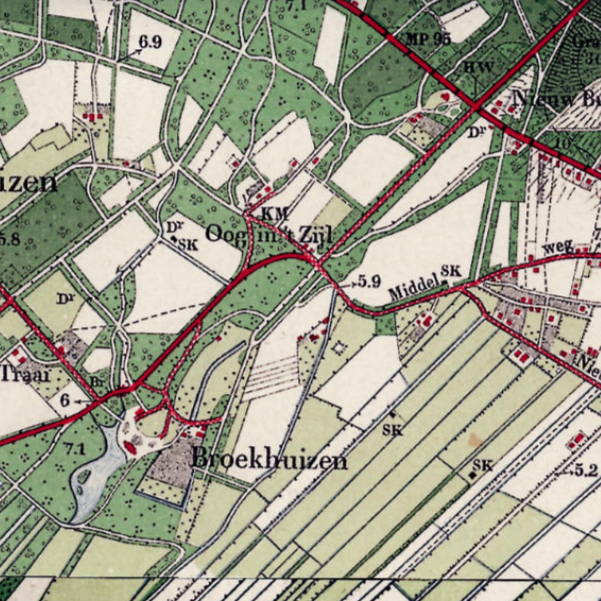
Map close-up of Broekhuizen in 1725 ©TOP25 | topotijdreis
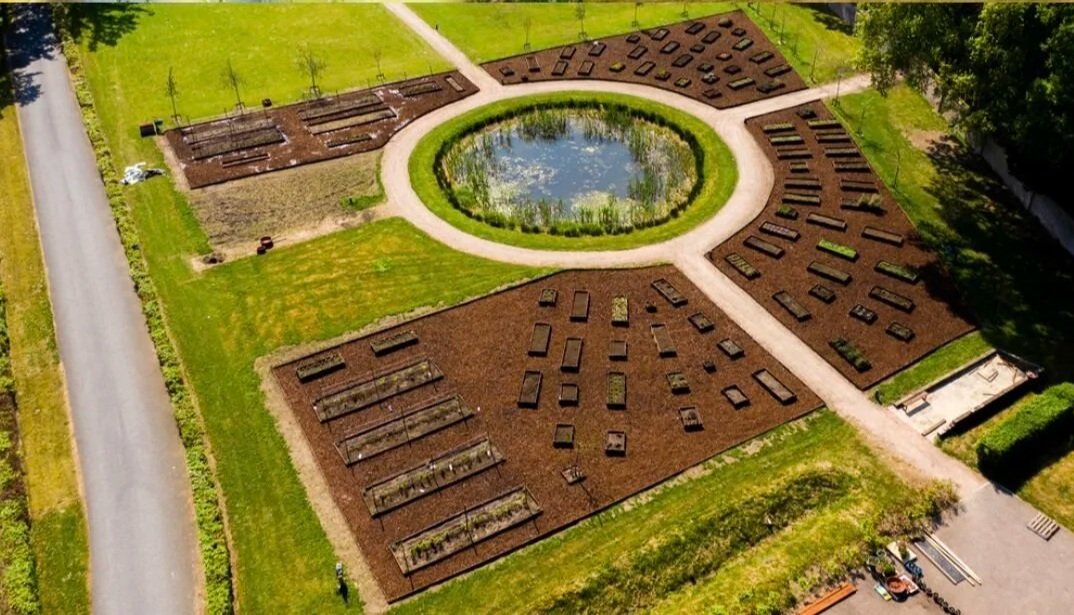
The kitchen garden of Landgoed Broekhuizen today. ©parkbroekhuizen.nl
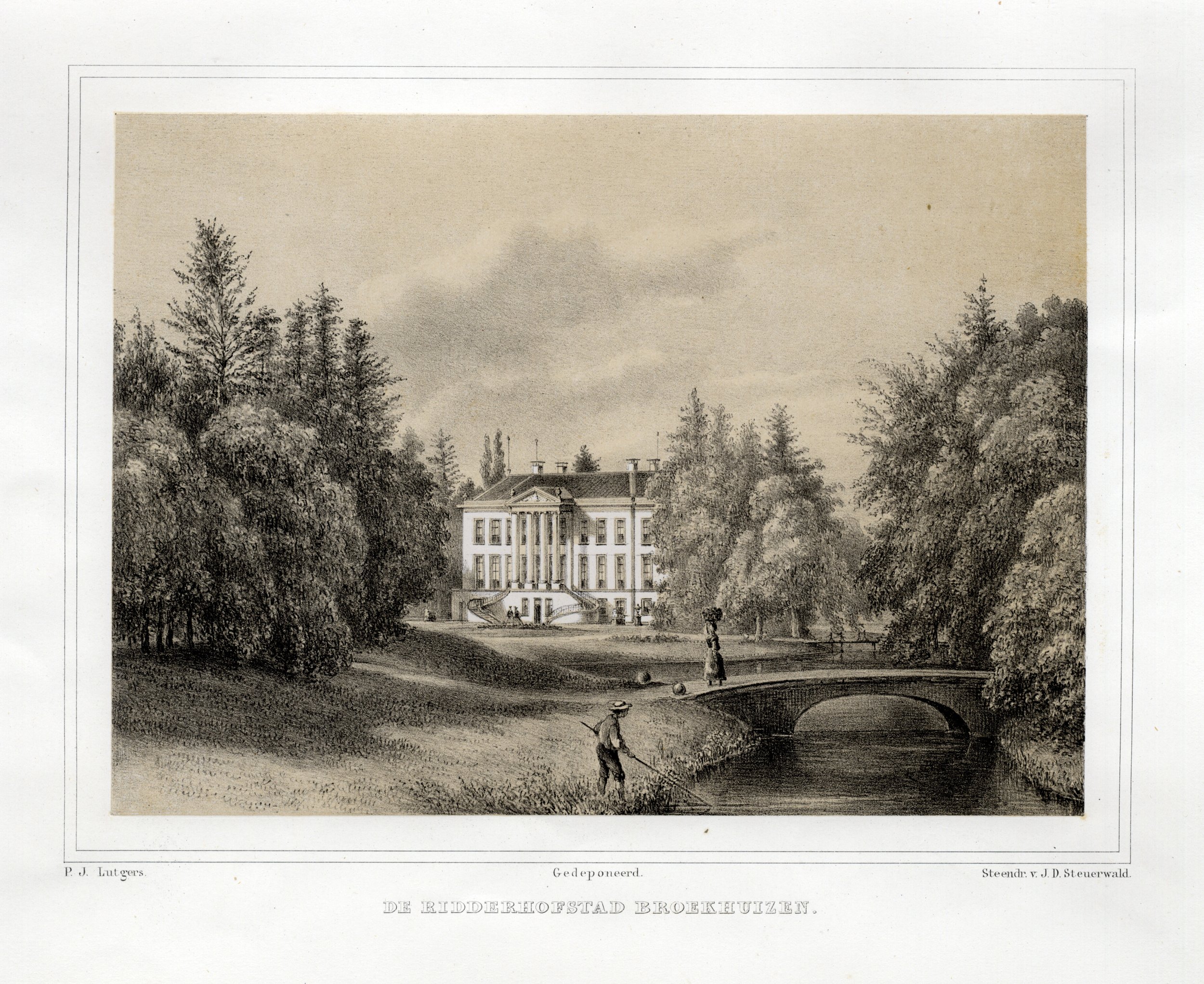
By the century's end, fashion had shifted. Landscape architects Zocher Sr. and Zocher Jr. reworked the grounds in the English style — winding paths, informal ponds, and carefully staged vistas designed to evoke an idealized, pastoral Arcadia. Where the Baroque garden displayed power through order, the English garden offered its owners an escape from it: a curated wilderness for leisure, boating, and quiet retreat.
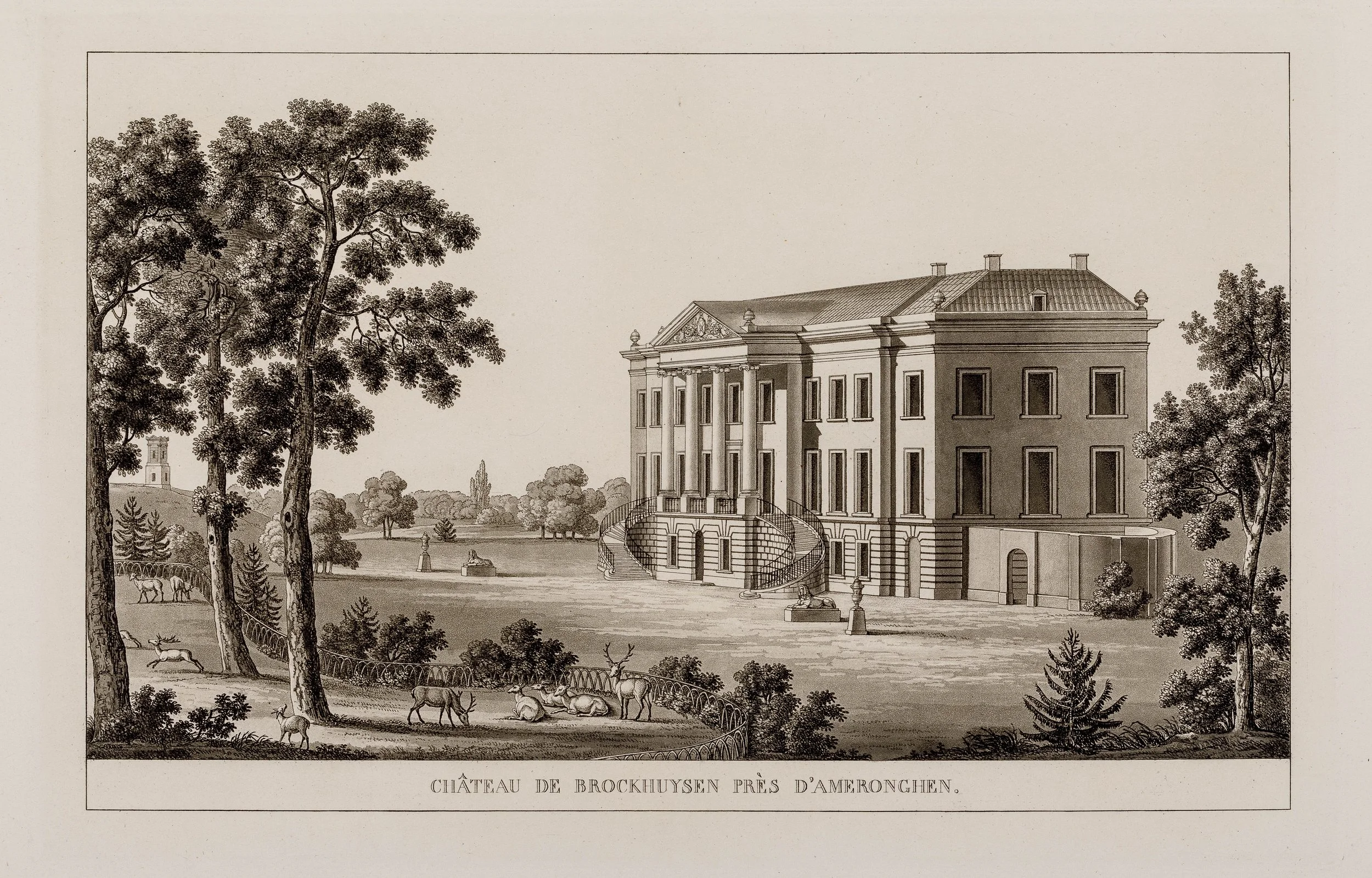
View of the facade of Broekhuizen in the surrounding landscape park. Tinted lithograph by P.J. Lutgers, 1868/1869. ©Het Utrechts Archief
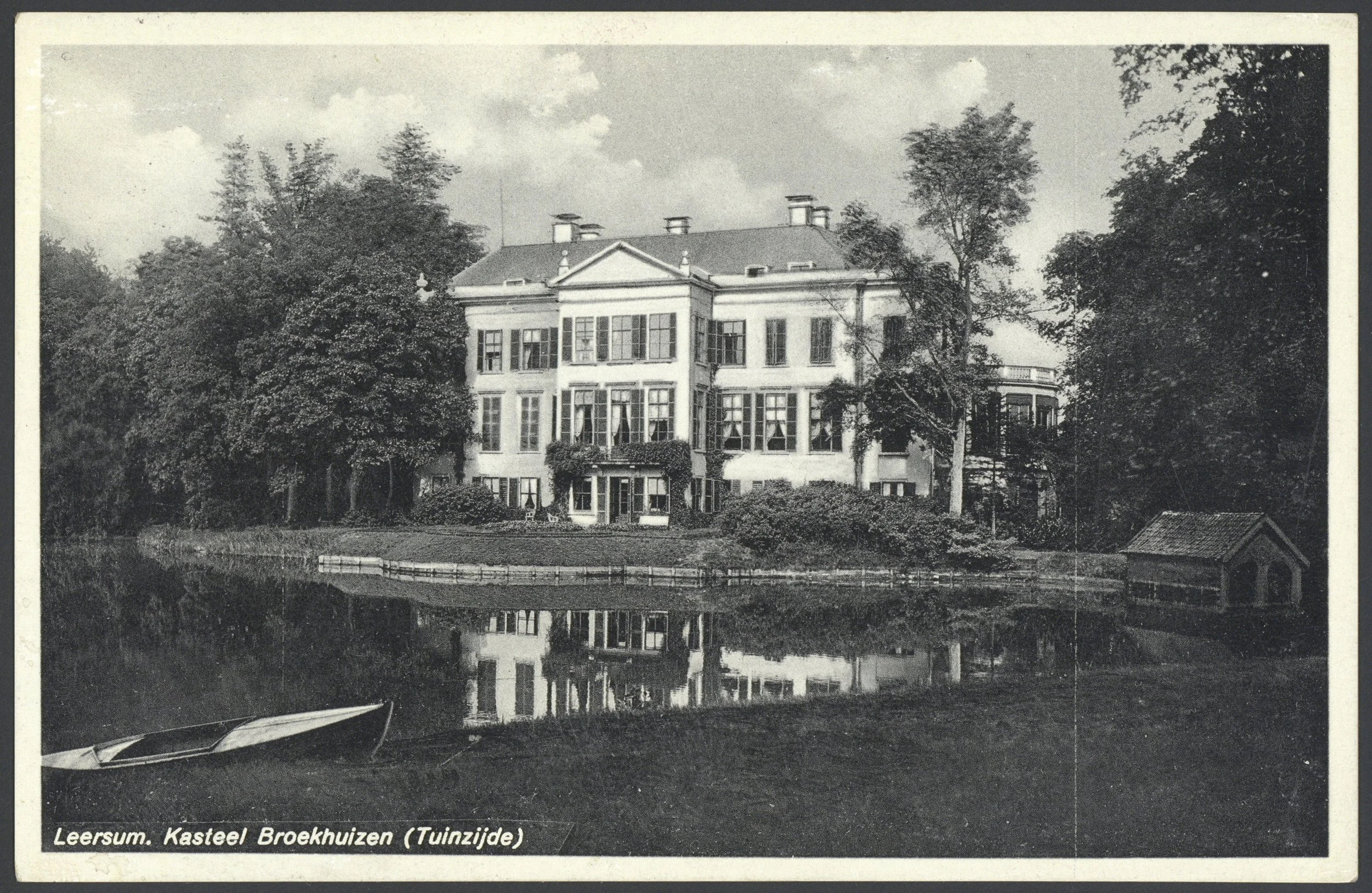
The English landscape on the back of the estate, showing recreational elements: tea house and boat, 1937 ©Het Utrechts Archief
-
![]()
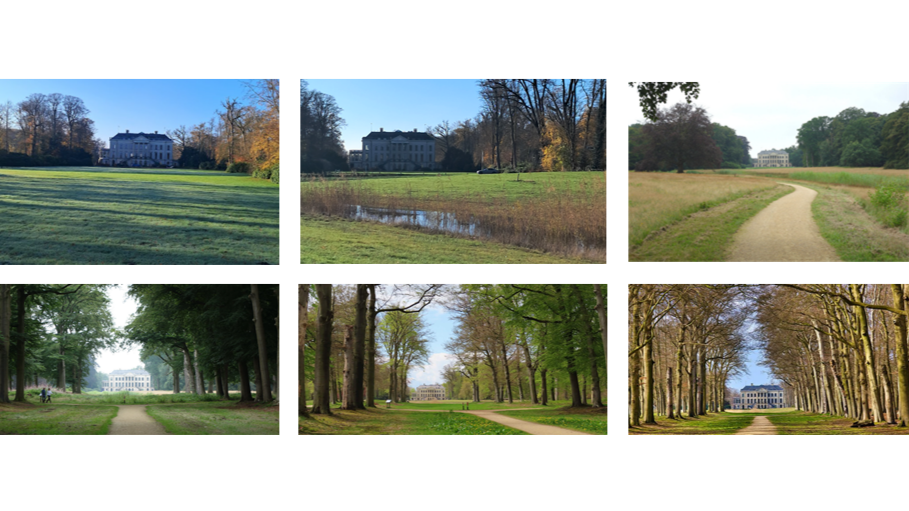
BAROQUE STYLE
Walking away from the estate. From open lawn, to single planted trees, double row and straight entrance avenue.
-
![]()
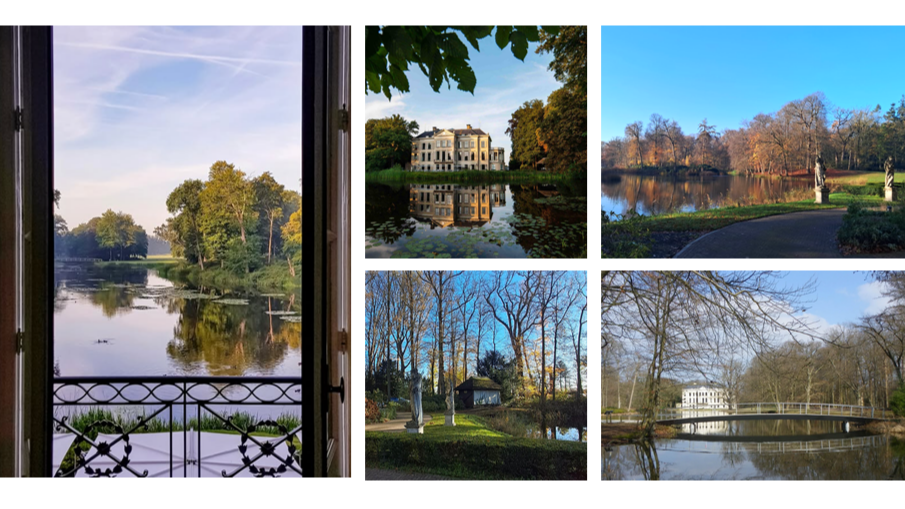
ENGLISH STYLE
The back of the estate welcomes an idyllic portrait: a water pond, statues, a tea house, and overall more informal planting and winding paths.
THE FORGOTTEN VEGETABLE GARDEN
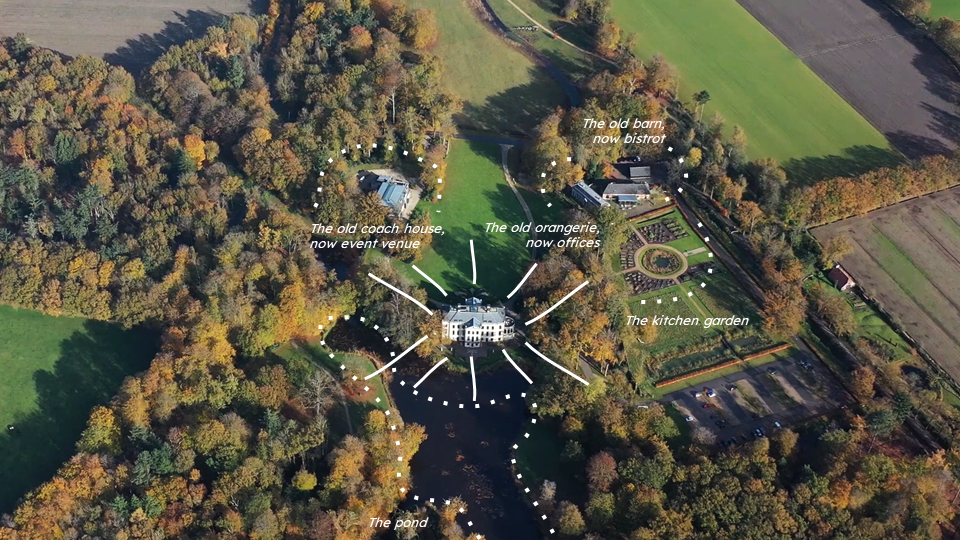
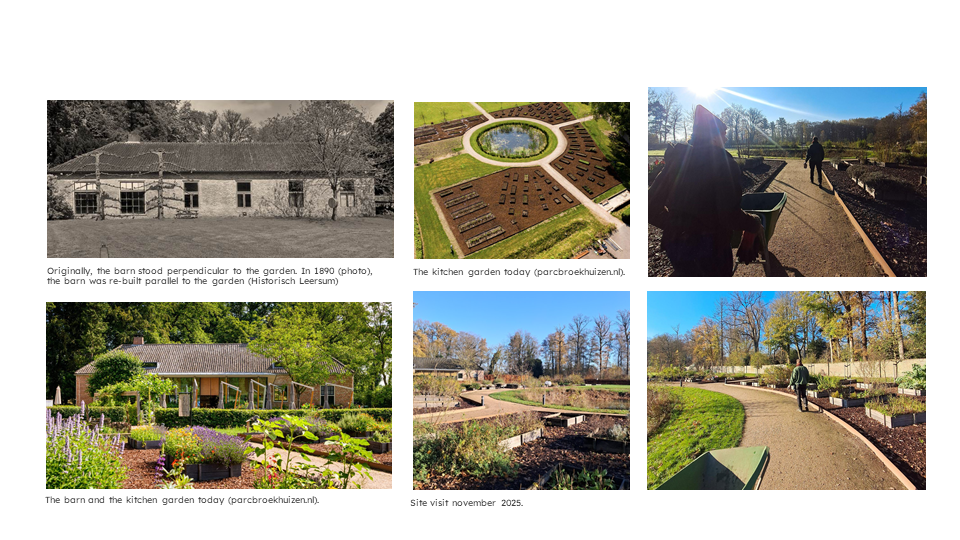
Not everything survived equally. While the main house and park were carefully documented, the kitchen garden — tended for generations by servants and gardeners rather than the family that owned the estate — slowly disappeared from the historical record, only rediscovered and restored since 2020. It's a small but telling example of how heritage tends to preserve the stories of the powerful, while the everyday labor that sustained an estate fades from view.
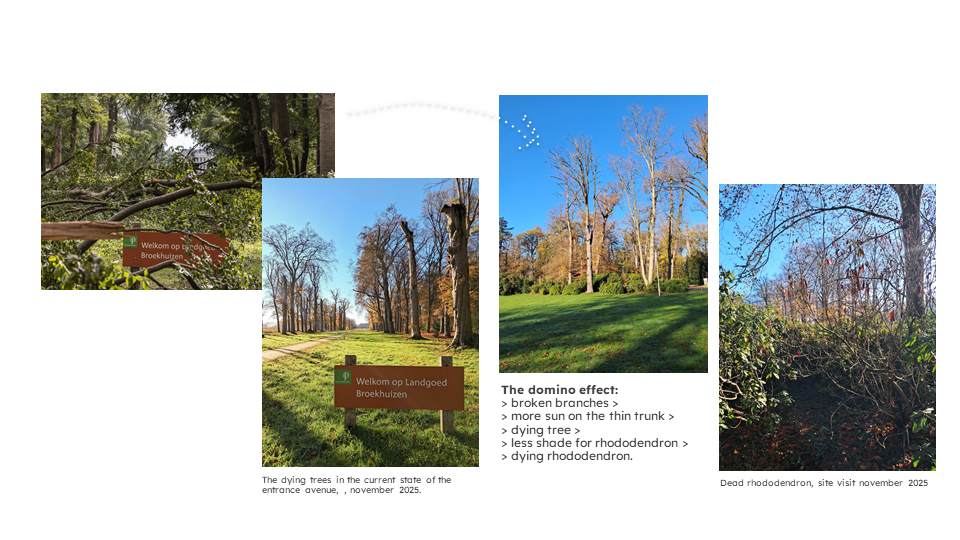
Broekhuizen's landscape is still changing. A severe storm in June 2021 tore through the historic avenue, leaving beech trees sunburned and dying once their protective canopy broke — and taking the shade-loving rhododendrons beneath them down too.
At the same time, the estate's shift into a luxury retreat and event venue raises its own questions: how much of Broekhuizen's history is being preserved, and how much is being packaged for an exclusive experience that trades on the past without fully reckoning with it?