
LIVING TANGLE: Coexisting Today and Tomorrow
Ecology, Anthropocene, and sustainability in Contemporary Art practices
Master thesis | Albertina Academy of Fine Arts of Turin | 2024
In the Anthropocene, humanity's relationship to the planet, and to the countless other species with which it shares it, has become impossible to ignore. This thesis asks what role contemporary art can play in that reckoning: depicting ecological crisis and actively reshaping how we understand our place within what it calls a "living tangle" — an interconnected, interdependent web of human and more-than-human life. The research pairs ten contemporary artworks across five thematic chapters, each built around a different way of engaging with the more-than-human world — protecting it, surviving within it, shaping it, healing it, and connecting through it. Drawing on ecological philosophy, art history, and biomimicry, the thesis traces how these artists use ecological thinking, care, and collaboration to model new forms of coexistence.
RESEARCH QUESTION
How can artistic creative processes, visual culture, and its interpretation shape our perception of a shared planet and our relationships with other species?
ART IN THE ANTHROPOCENE
The Anthropocene names both a geological condition and a cultural one: an era in which human activity has become a defining force on Earth, and in which that force demands new ways of thinking, not just new policy. The thesis situates contemporary eco-art within this shift, tracing its roots and its ambitions, and turns to James Lovelock's concept of Gaia — the Earth understood as a living, self-regulating system rather than a passive resource — to challenge anthropocentric assumptions. Biomimicry, or what the thesis calls "natural genius," adds a further thread: the idea that human design might learn from, rather than dominate, the intelligence already at work in the natural world. Together, these ideas argue for an ecocentric perspective in which all forms of life carry value in their own right.
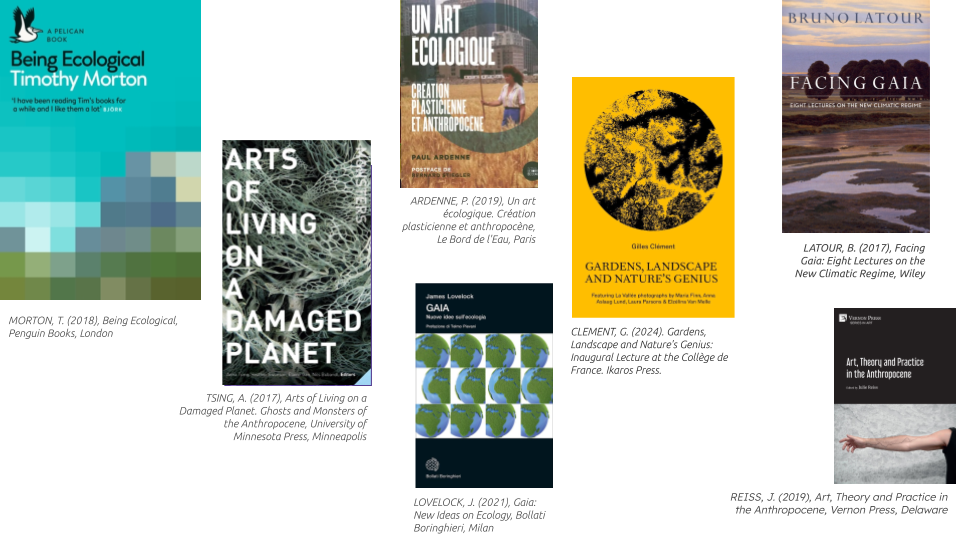
PROTECT. A refuge for a microworld
The thesis reads Gilles Clément's Parc Henri Matisse and herman de vries's Sanctuarium as attempts to set land aside for nature rather than for people. In Clément's park, an inaccessible island of concrete and urban debris sits at the center of an otherwise open public space, deliberately left uncultivated as a refuge for wildlife within the city. Both works ask what it means to protect a piece of land by withholding human access to it, and what that withdrawal makes possible for other forms of life.
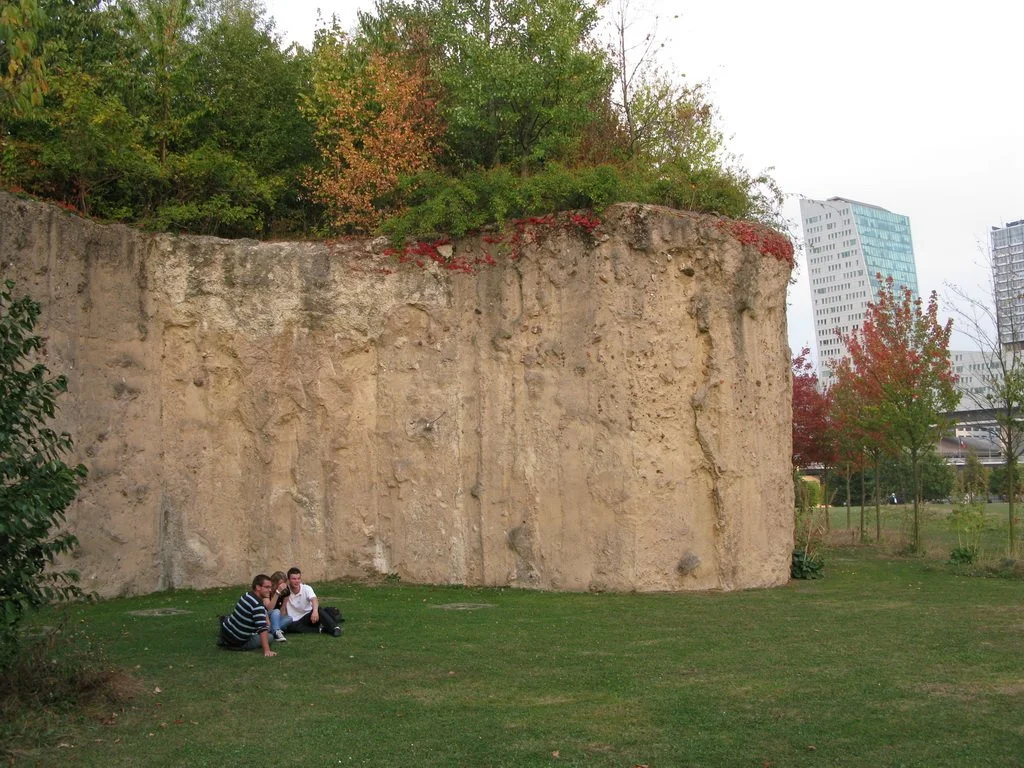
Gilles Clément, Derborence Island, Parc Henri Matisse, Lille (France), 2017
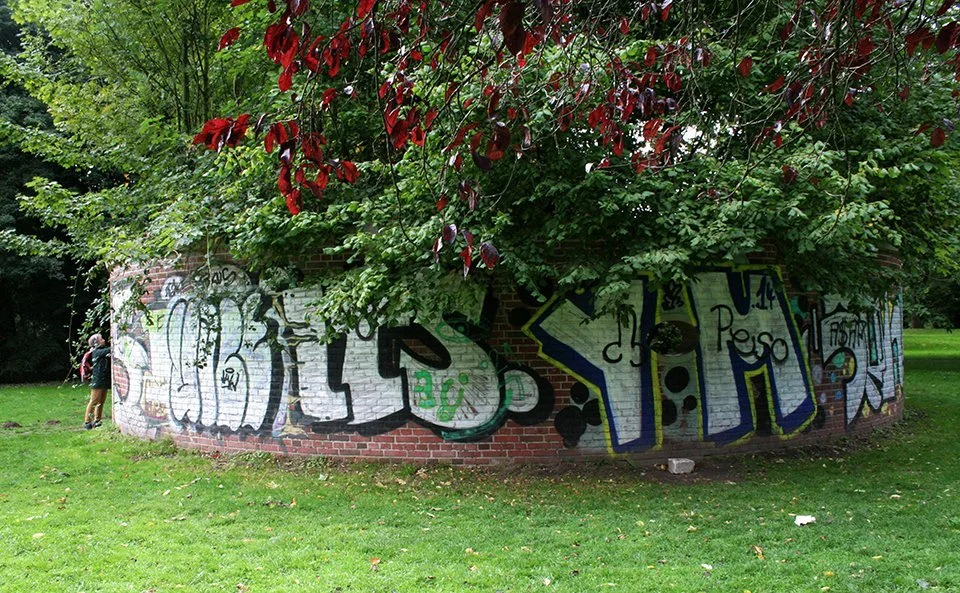
herman de Vries, Sanctuary, Münster (Germany), 1997
SURVIVE. An artificial environment
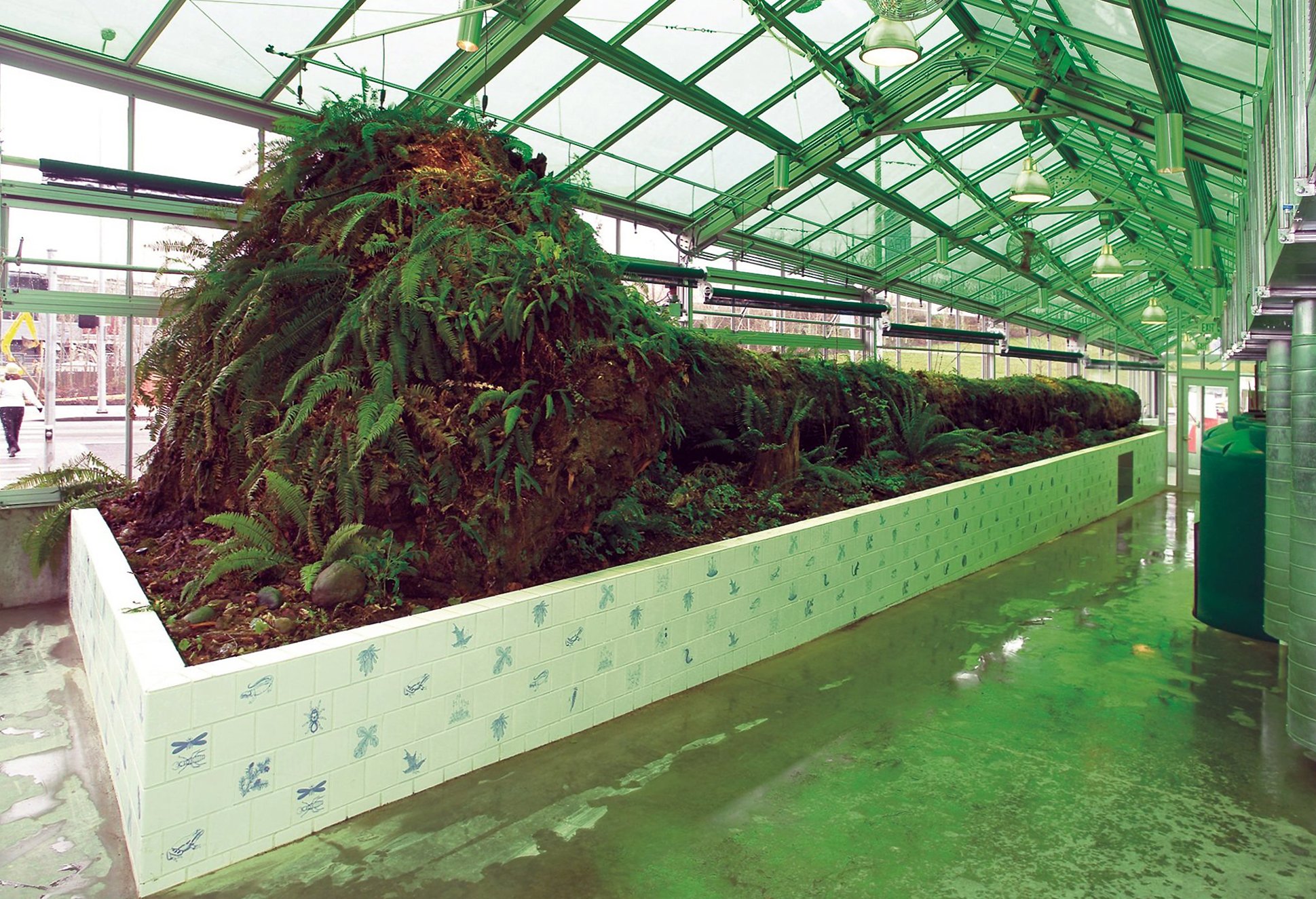
Here, Mark Dion's Neukom Vivarium and Nick Laessing's Plant Orbiter take the form of built environments engineered to keep life going once it can no longer survive on its own. Dion's work encloses a decomposing hemlock tree inside a greenhouse that recreates its original forest habitat, turning decay and regrowth into something visible and continuous. The chapter frames these pieces as sanctuaries and learning spaces at once, artificial worlds that sustain life within landscapes already reshaped by human presence.
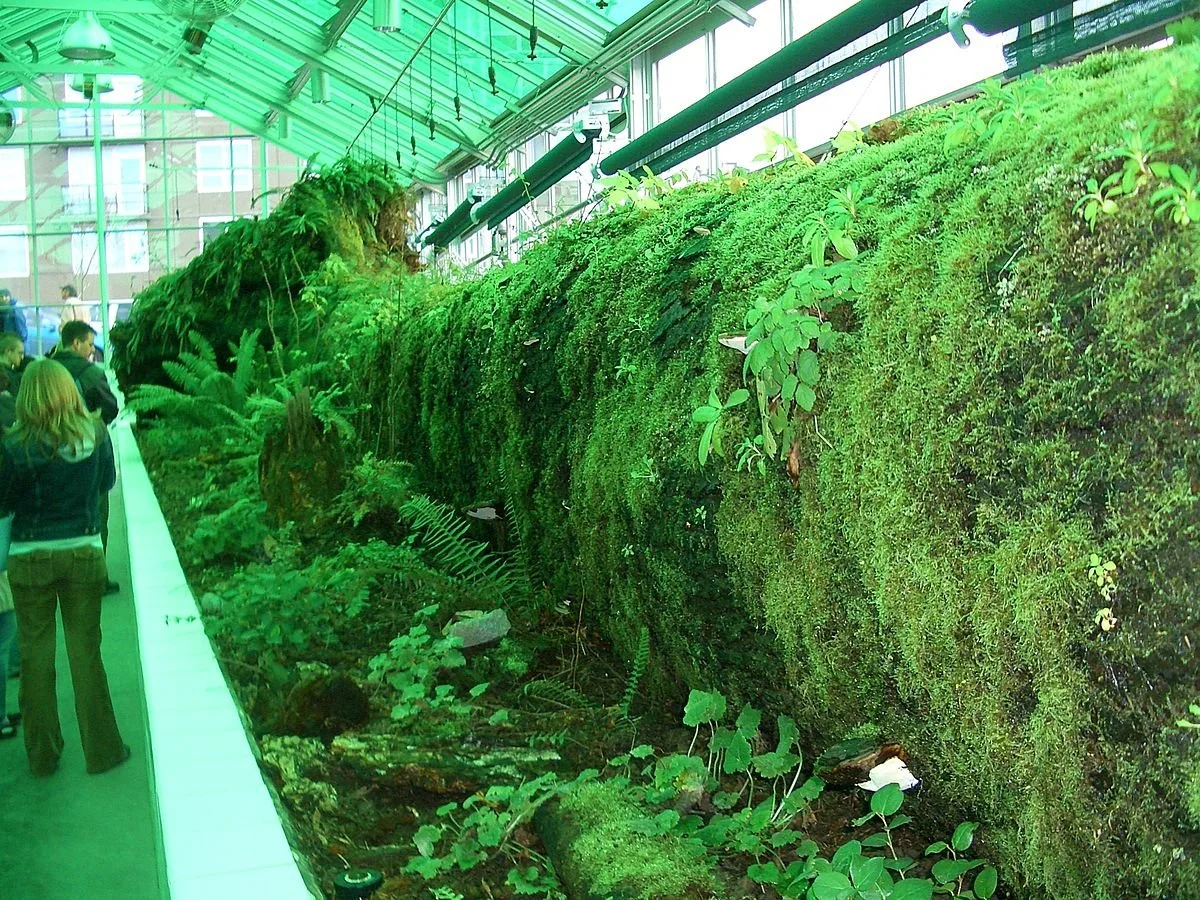
Mark Dion, Neukom Vivarium, Olympuc Sculpture Park, Seattle (USA), 2006 - present
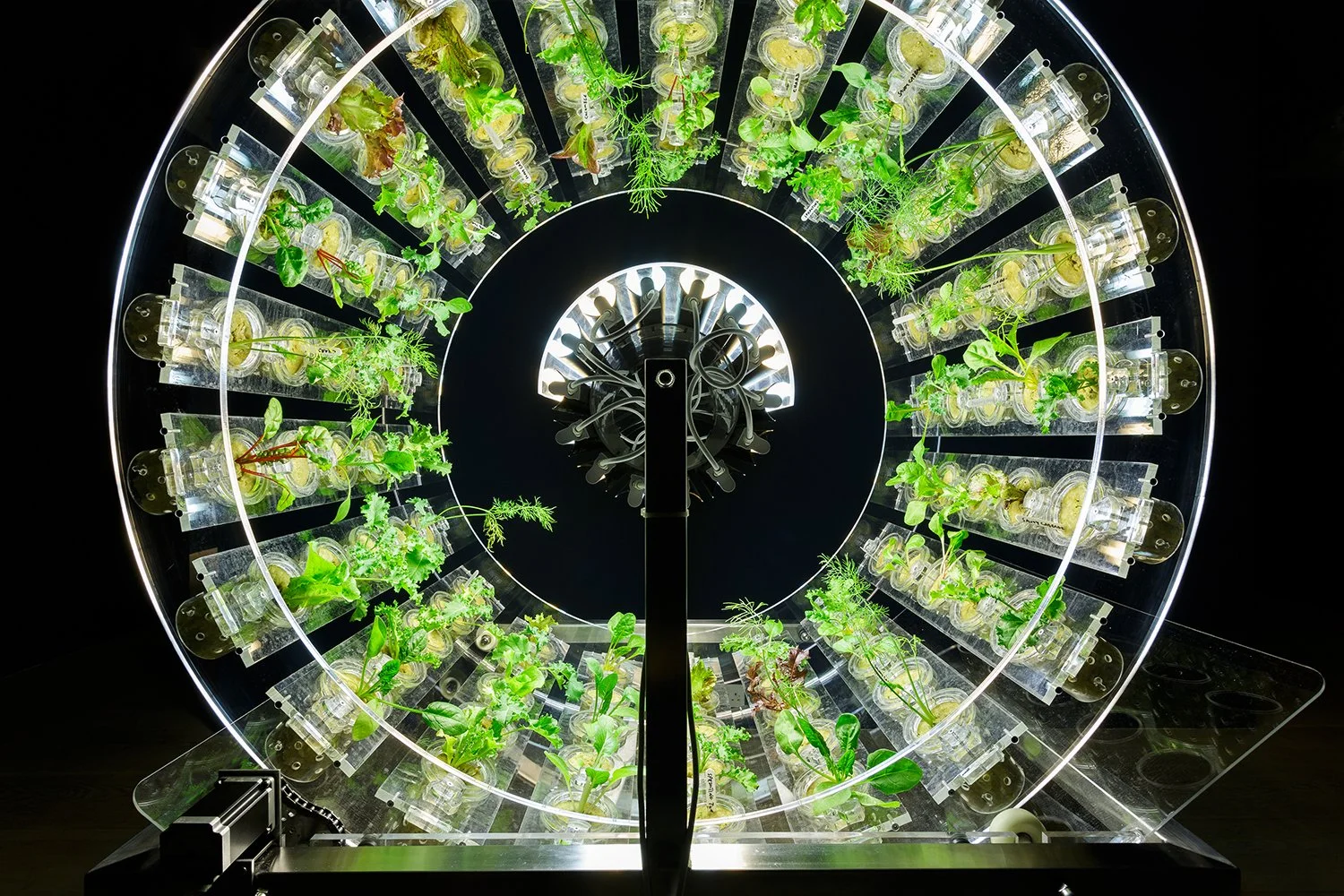
Nick Laessing, Plant Orbiter, Delfina Foundation, London, 2019. Photography by Tim Bowditch
SHAPE. The domestication of the earth
Maya Lin's Storm King Wavefield and Robert Morris's Untitled Earthwork (Johnson Pit #30) both use land art to make the act of shaping terrain itself the subject of the work. Where Lin's undulating earthwork evokes natural forms through deliberate design, Morris reclaims a former gravel pit, turning an extractive scar into sculpted ground. This chapter considers what it means to physically mold a landscape, and whether doing so can still be an act of care rather than control.
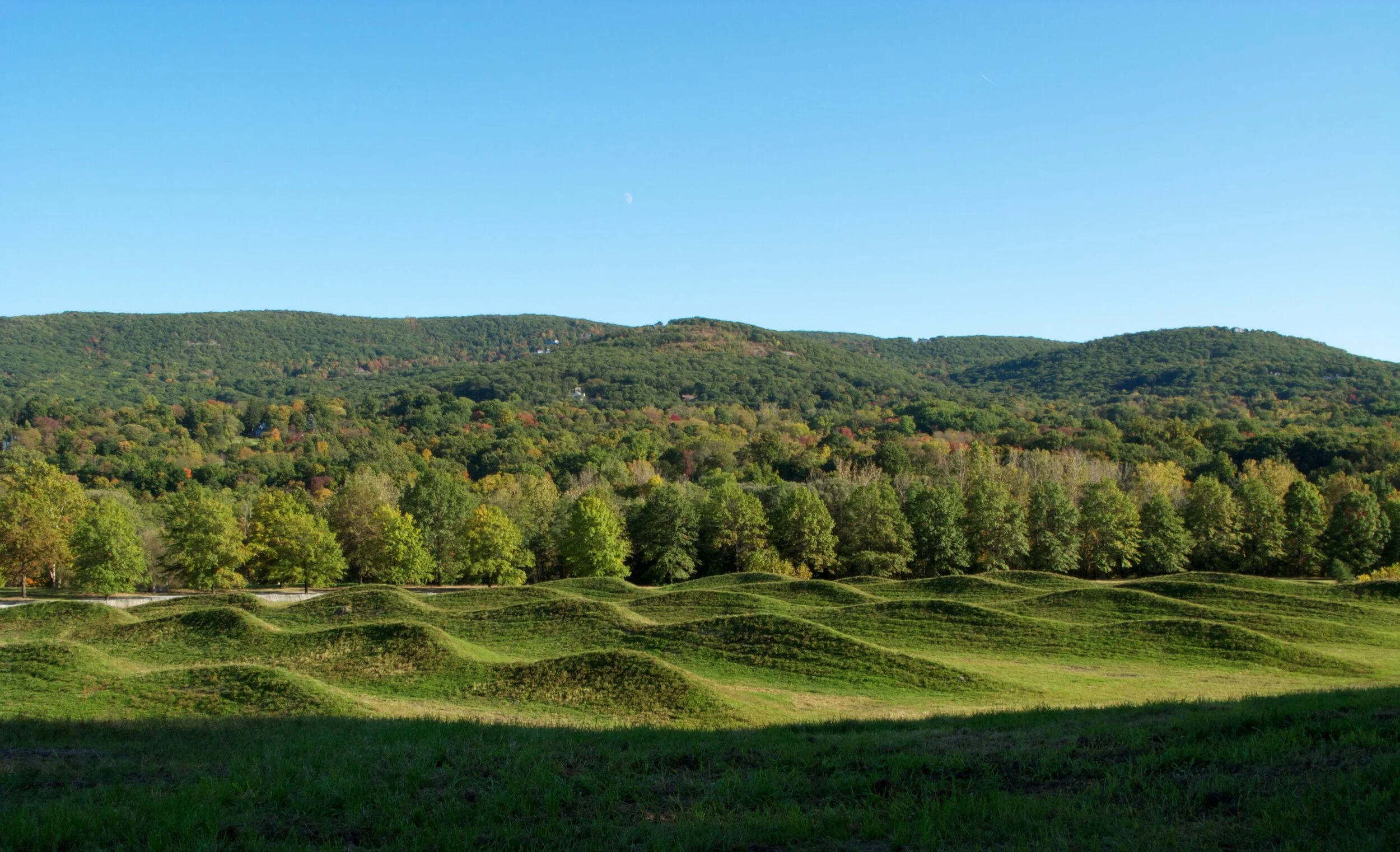
Maya Lin, Storm King Wavefield, 240,000 square feet, Storm King Art Center, New Windsor (USA), 2007 - present. Photography by Jerry Thompson, Courtesy Storm King Art Center
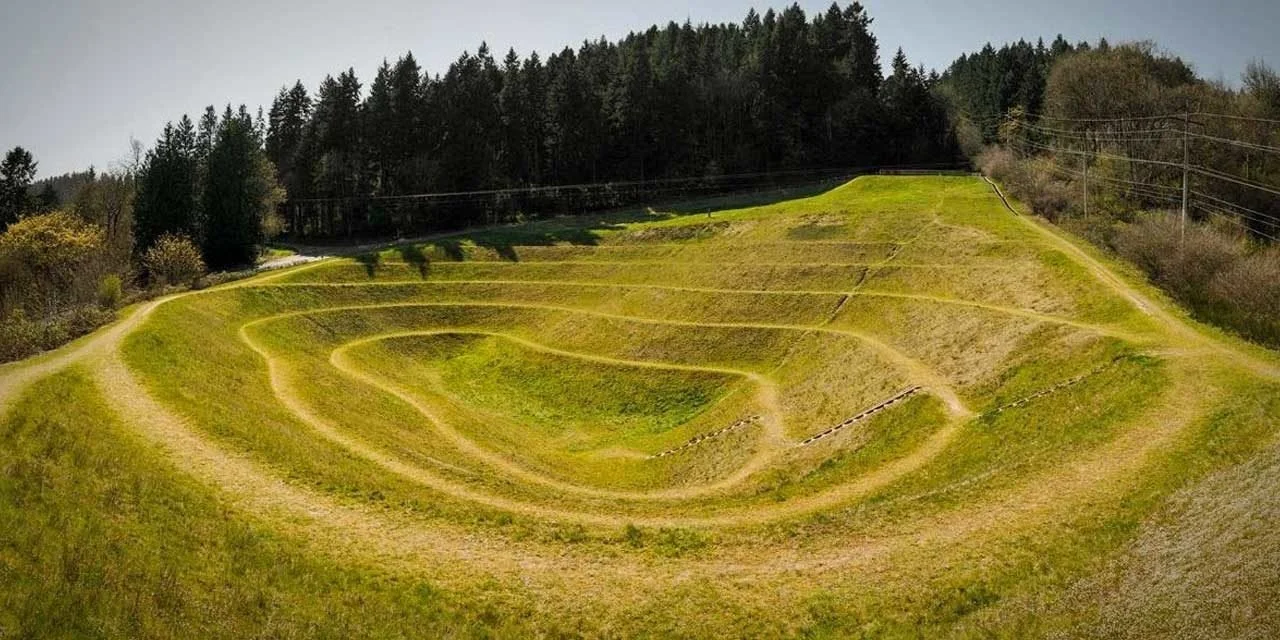
Robert Morris, Untitled Earthwork (Johnson Pit #30), Kent Valley (USA), 1978 - present. Photography by Joe Freeman
HEAL. The power of nature
Mel Chin's Revival Field and Jackie Brookner's Prima Lingua both put plants to work as active agents of remediation. Chin's project uses hyperaccumulator species to draw heavy metals out of contaminated soil, turning a toxic landfill into a working ecological experiment. The chapter frames these works as evidence that nature itself — not just human intervention — can be the mechanism of repair, with artists acting as facilitators of that process rather than its authors.
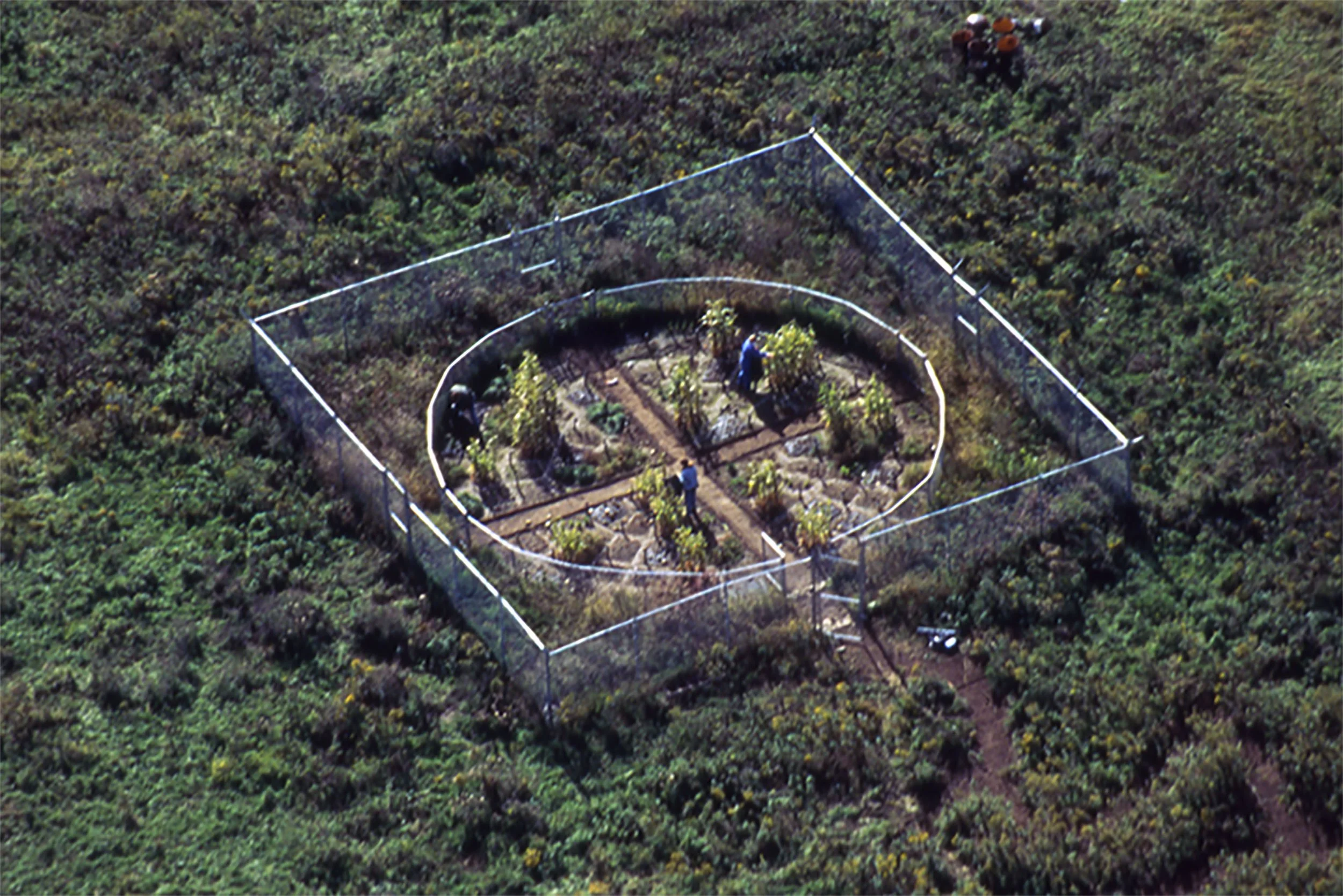
Mel Chin, Revival Field, Saint Paul (USA), 1990 - present. Courtesy: Walker Art Center Library & Archives
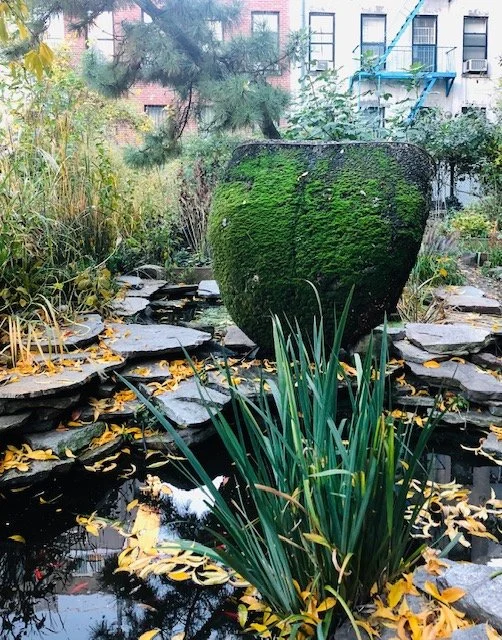
Jackie Brookner, Prima Lingua, concrete, volcanic rock, mosses, ferns, marsh plants, The Plaza Cultural Community Garden Manhattan (USA).
CONNECT. Creating a social garden
The final chapter turns to Zheng Bo's Eco-socialist Garden and MyVillages/Wepke Feenstra's Libera Scuola del Giardino, projects that treat gardening as a collective and political act rather than a private one. Both works use the shared labor of tending a garden to build relationships between people, and between people and the land they cultivate. This closing chapter positions gardening as the most direct form of the groviglio vivente: connection made through hands-on, everyday care.
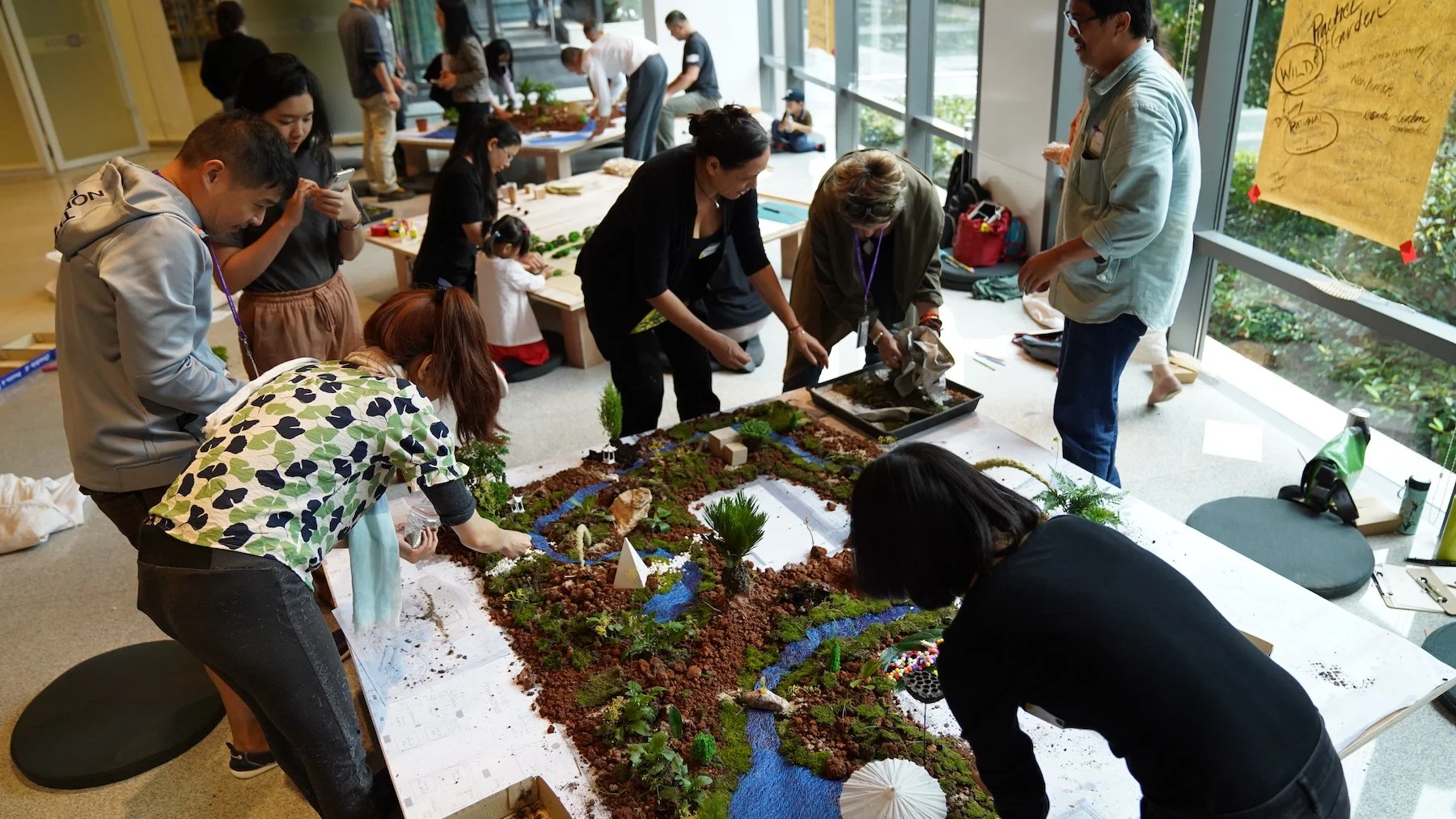
Zheng Bo, Eco-socialist Garden, NYU Shanghai Workshop Institute of Contemporary Arts, Shanghai 2019
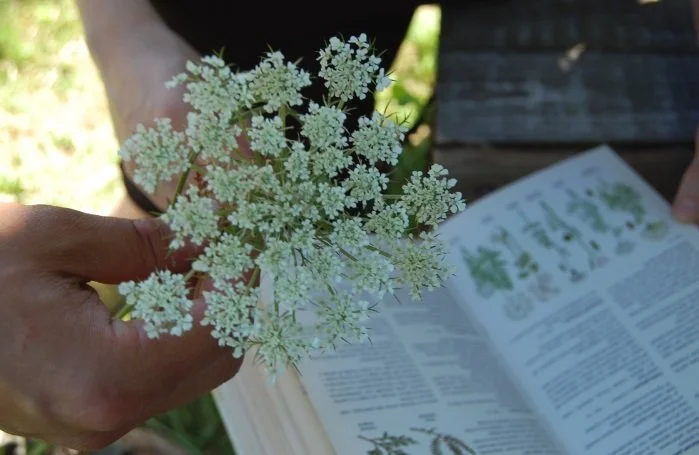
MyVillages/Wapke Feenstra Free Garden School Workshop_56 / Herbarium PAV, Turin 2016
A SLOWER, MORE RECIPROCAL RELATIONSHIP
Nature is out of balance. Anthropocentric culture has spent generations ignoring how interconnected life on Earth really is, flattening both ecological complexity and human diversity into a single, damaging idea of progress. But the damage isn't irreversible. We have the capacity to regenerate more than we've destroyed, we just need the values to match it. Art can help get us there: not as decoration, but as a working tool for reconnecting people with the natural world and imagining what comes next.
The thesis closes with the plant kingdom as a model worth learning from — its patience, its self-sufficiency, its refusal to chase progress for its own sake. Drawing on De Précy, it ends on an image rather than an argument: opening the gate of a garden is a small, symbolic act of stepping into a slower, truer sense of time, one that's ours too, if we let ourselves remember it.