Civilizing youth in the living environment with Amsterdam’s Openbare Speeltuin N.1 (1880-1923)
AT THE ROOT OF URBAN PLAYGROUNDS
Playgrounds are so ordinary we rarely think to ask where they came from. This project traces the origins of the Netherlands' first public playground, still standing today at Weteringplantsoen in Amsterdam, and asks what its creation reveals about how the city thought about childhood, class, and public space in the late nineteenth century.
Between 1871 and 1923, a citizens' association pushed to bring free, open-air recreation to the city's children — a novel and, at the time, controversial idea. Drawing on archival newspapers, association records, historical maps, and personal memoirs, this research reconstructs how the playground was designed, used, and debated, and what it meant for a city beginning to make room for its youngest, least powerful residents.
How did the societal, economic and political transformations of late-19th and early-20th century Amsterdam shape the creation and the design of the Netherlands’ first public playground?
RESEARCH QUESTION
Children, play, and the city
Play is a fundamental human activity that participates in the creation of culture, rooted in the very prehistoric times of the human species. As Huizinga argues, play is a way of collectively making sense of reality, constructing identities and meanings, slowly building an understanding of the world. This is particularly true for children, whose daily experience of city life is shaped by having little agency and having to navigate a world created and manipulated by adults and for adults. As Gehl and Lefebvre suggest, children at play are central to urban life, a catalyst for lively, inclusive cities. Yet the playground is also an emblematic element of tension, giving physical form to ideologies about social and spatial change while, at times, isolating children into fenced-off islands, cut off from the city as a whole.
amsterdam at the turn of the century
Between roughly 1860 and 1920, Amsterdam went through a period of massive economic recovery and demographic growth, the beginning of the modern capital we know today. Between 1880 and 1910 alone, the population grew from 317,000 to 511,000, a demographic shift that had never happened before in Dutch history. This growth set off a domino effect: a dramatic housing crisis, precarious living conditions, and a city forced to expand beyond its 17th-century walls for the first time. The working class was largely new to city life, migrated from the countryside in search of work, and unfamiliar with the norms of urban living. With parents working long hours in poor conditions, many children worked too, and for those who didn't, the street became the primary alternative to play — a space of autonomy, but also of real danger. It is within this transition, from private liberal initiatives to a more collectivist, state-driven approach, that the creation of the first public playground took place.
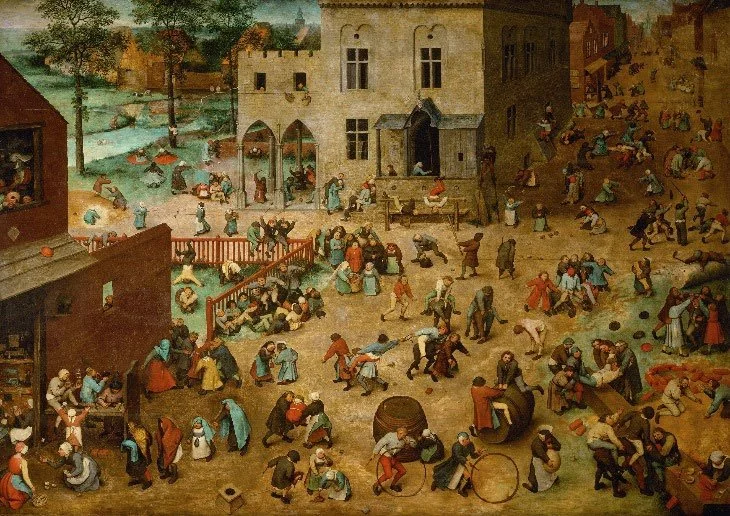
Pieter Bruegel the Elder, Children’s Games, 1560.
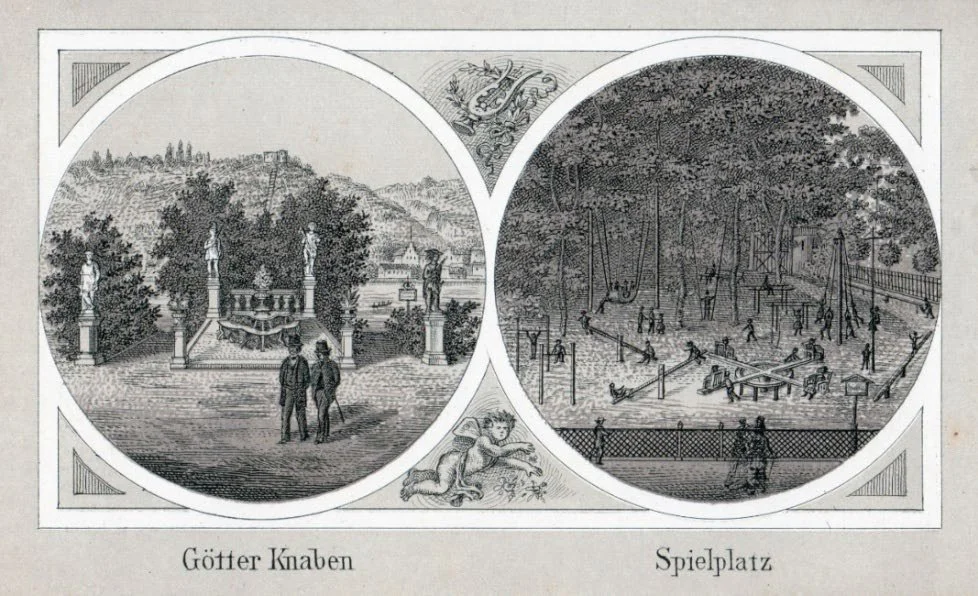
The idea for the first public playground came from Nicolaas Tetterode, a City Council member and factory owner deeply engaged in Amsterdam's poor relief and social services. In 1879, he published an article proposing a public playground as a remedy for the "misconduct of street youth", describing it as a place of refuge for working-class children, where they could find air, light, and healthy movement after school — necessities of life, in his view, on the same level as bread. Tetterode drew his inspiration from playgrounds he had visited in Hamburg, Coblenz, and London, particularly the fenced playground in Coblenz's Rhineland Park, taking cues from its rules, opening hours, and layout. The project found early institutional support through the Association for the Improvement of Public Entertainment, founded in 1871, which took on the playground as one of its priorities and helped bring Tetterode's proposal to life in Amsterdam.
OPENBARE SPEELTUIN N.1
THE FIRST PUBLIC PLAYGROUND OF THE NETHERLANDS BECOMES REALITY
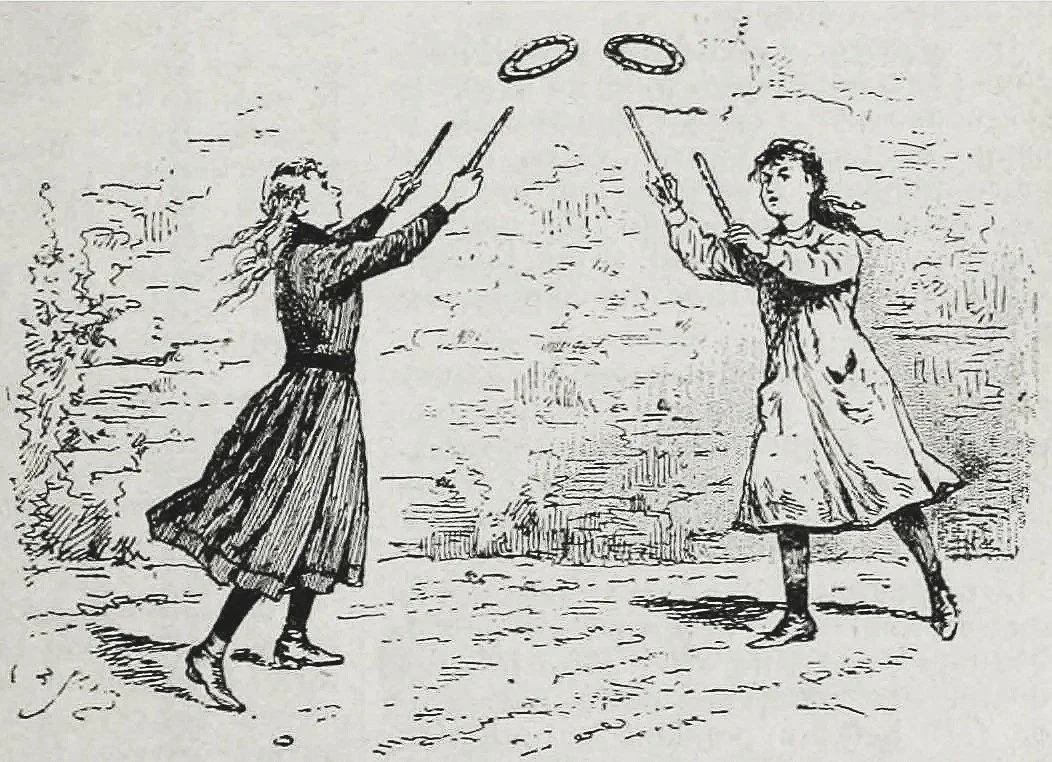
Jeu de grâces. Incision, 1897. ©Gallica BnF
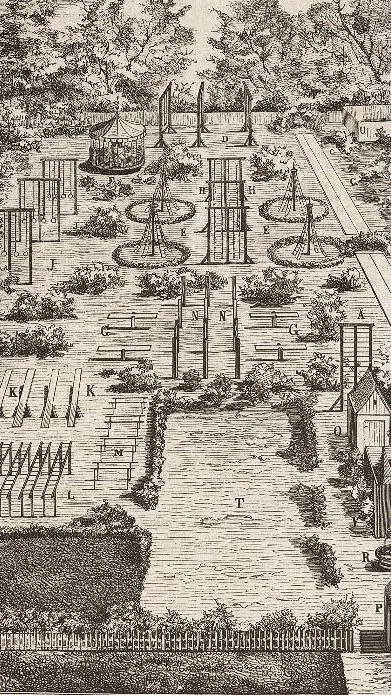
Openbare Speeltuin N.1, Tweede Weteringplantsoen, 1879. ©Stadsarchief Amsterdam
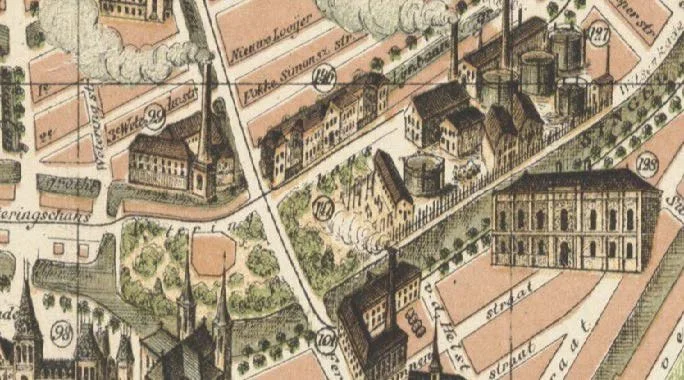
Close up of the second edition of the illustrated map of Amsterdam, scale of 1:10,500, made by Stemler J., Johan G., Gebroeders Braakensiek, 1886-1887. ©Stadsarchief Amsterdam.
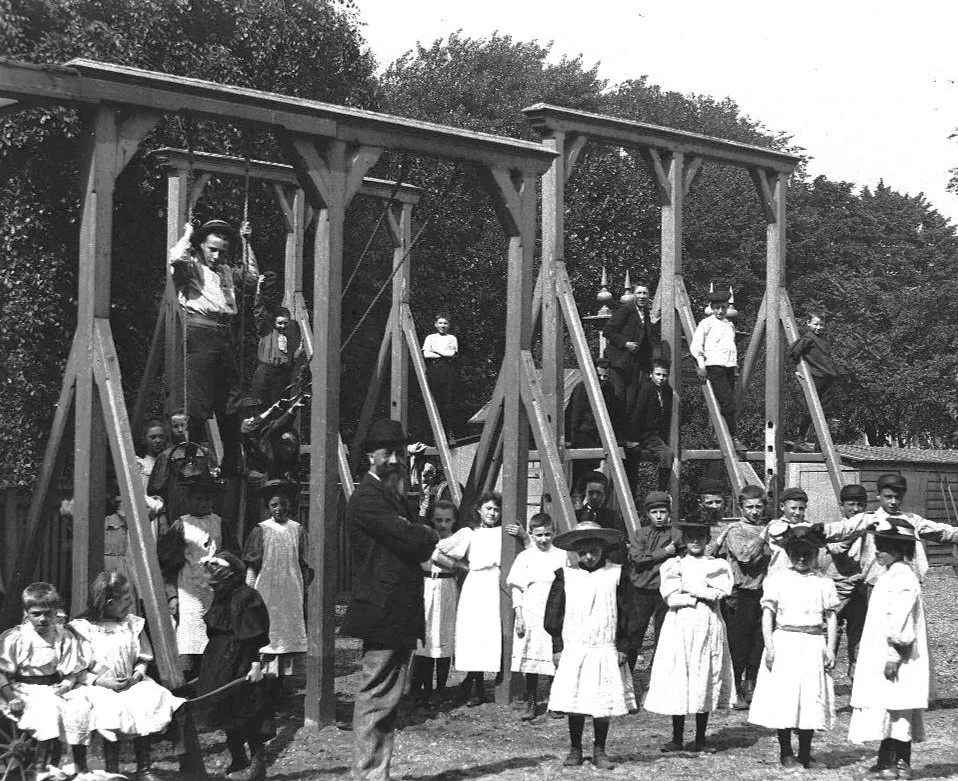
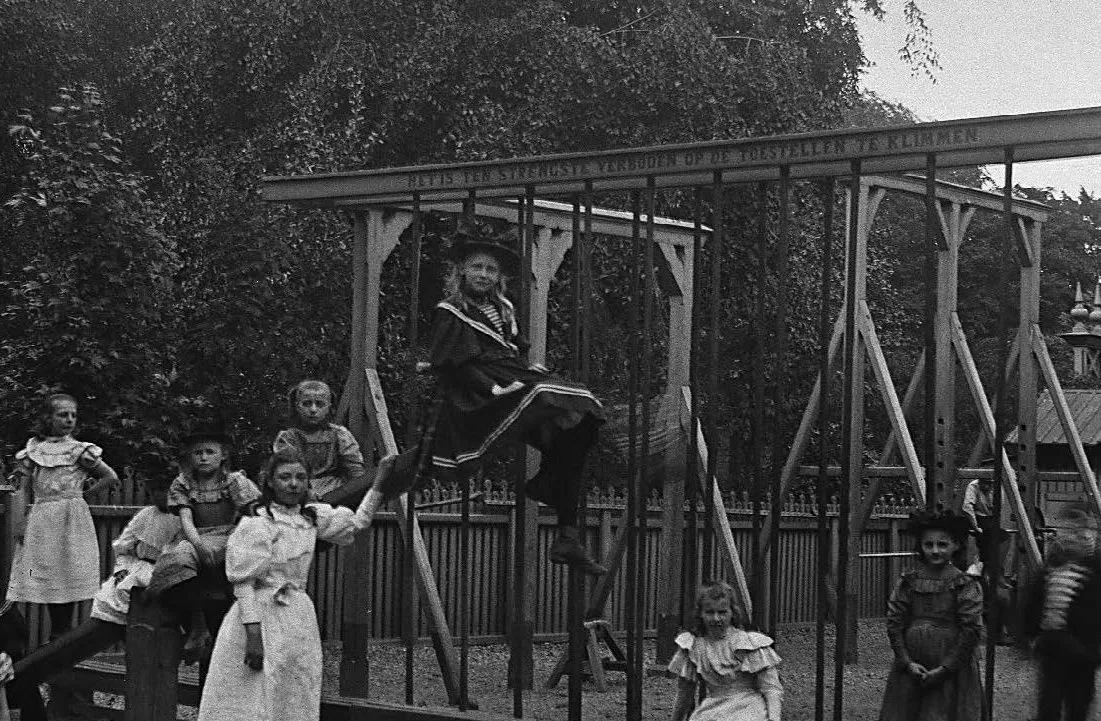
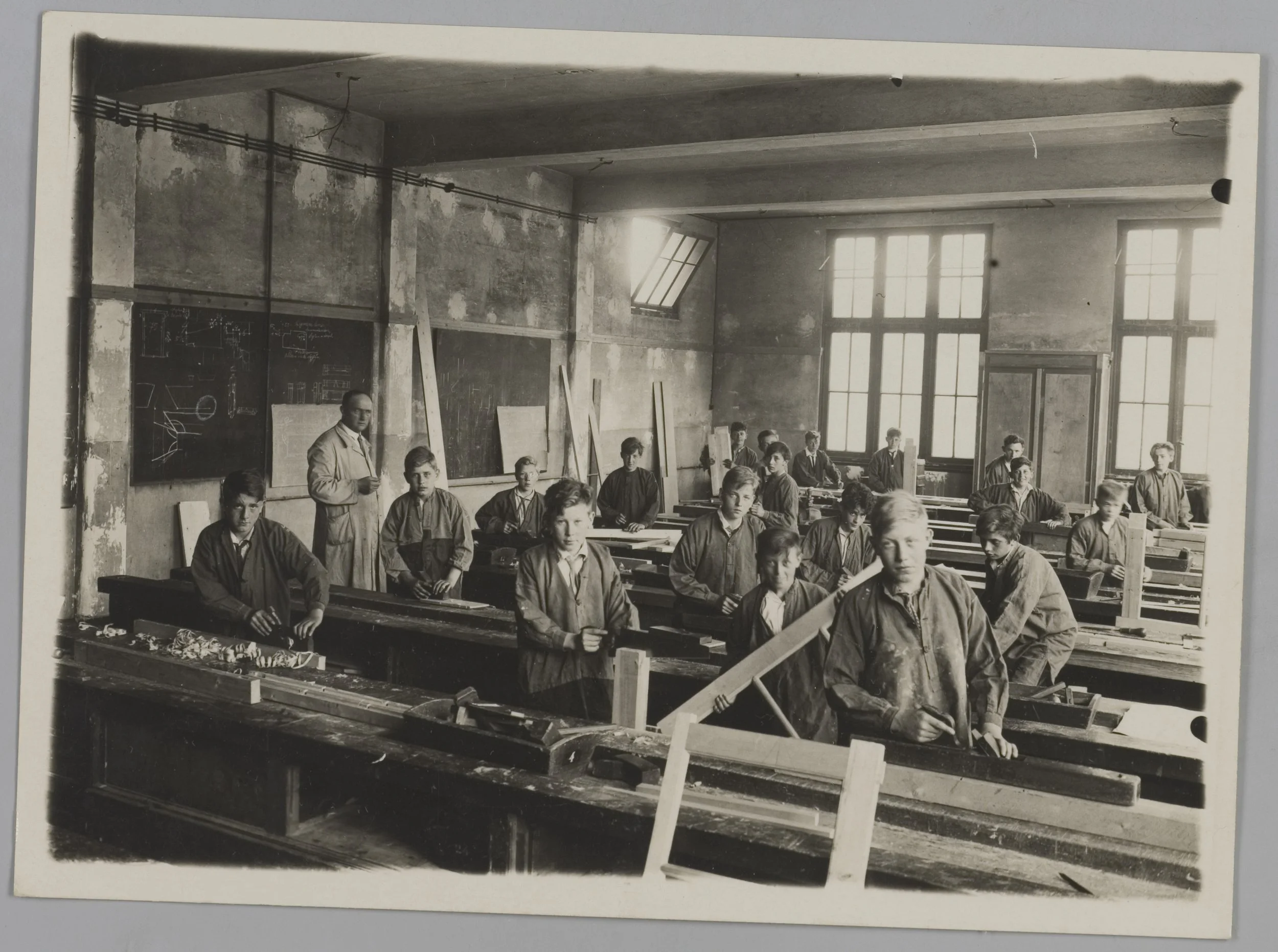
The playground opened its gates on 8 May 1880, an enclosed area of 3,750 square meters designed to hold around 600 children at once, filled with swings, seesaws, climbing ropes, and horizontal bars, built partly by pupils of the nearby Vocational School. It was located at the Tweede Weteringplantsoen, next to a gas factory and facing the city's industrial edge — no idyllic pleasure garden, but the city itself in all its multisensory reality. Its daily life was governed by strict rules: three hours a day, admission by ticket issued through school, supervised throughout by gymnastics teachers and caretakers, with troublesome behaviour resulting in immediate removal. On opening day, around 300 children lined up to enter, and within its first month, over 10,000 children passed through its gates. A memoir by one former visitor, Theo Thijssen, later recalled how order and discipline prevailed inside the fence — closer to an extension of school than a place of free play.
Openbare Speeltuin Nr.1. Photo by Jacob Olie, 1896. ©Stadarchief Amsterdam
Lithography of the Spielplatz (left) in Rheinanlagen, Coblenz, by Louis Kessler, 1876. ©Wikipedia Commons.
Pupils of the first Vocational School of Amsterdam, 1900 ca. ©Stadarchief Amsterdam
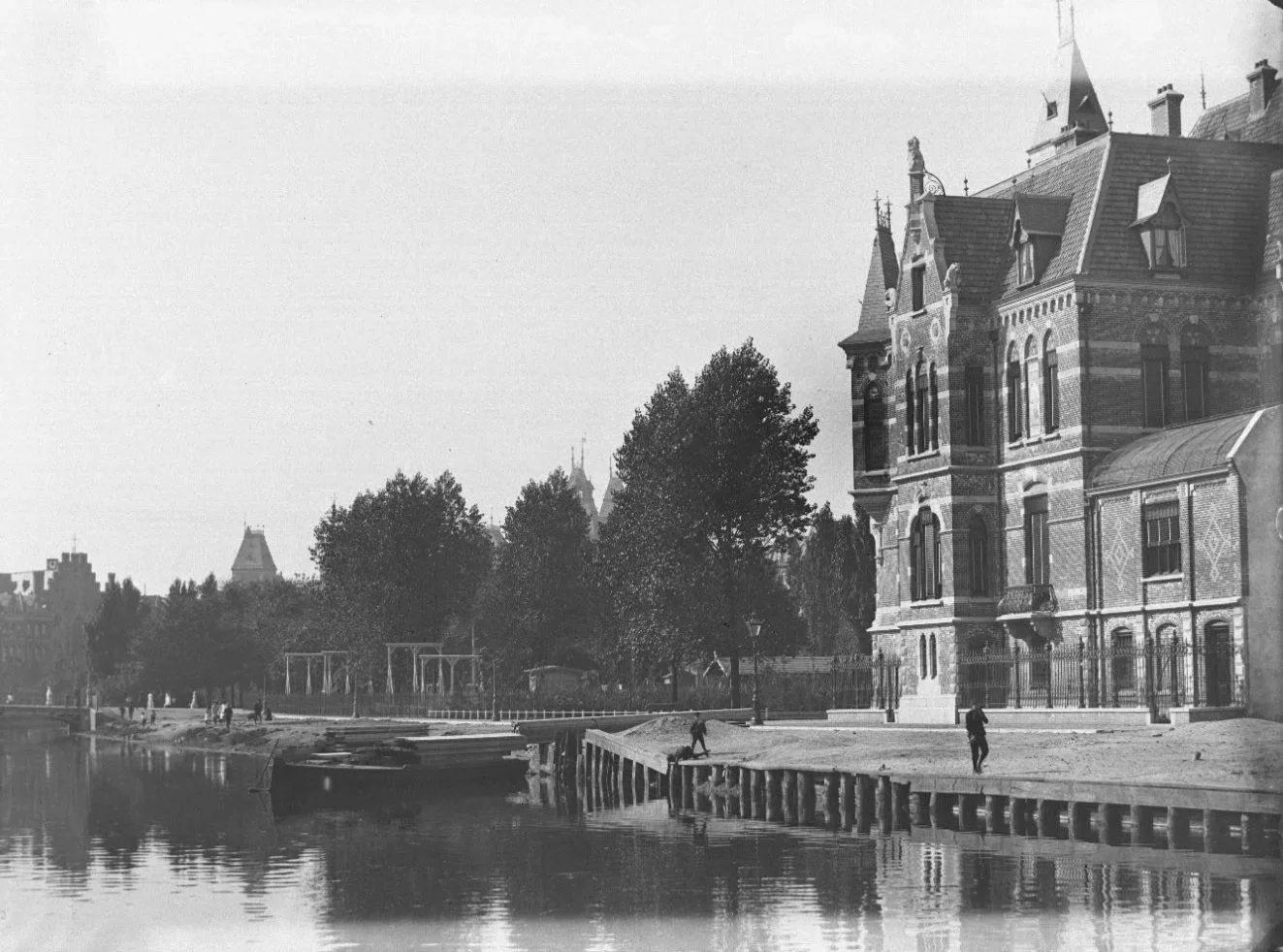
The first public playground on the left, viewed in a westerly direction from Stadhouderskade across the Singelgracht, Jacob Olie, 1891. ©Stadsarchief Amsterdam.
The Openbare Speeltuin N.1 was shaped less by a genuine concern for children's needs than by the social anxieties, moral ideals, and class interests of Amsterdam's bourgeoisie. In daily practice, the playground took on the character of an extension of school rather than a space of free play, with fixed opening times, supervision, and bells marking the start and end of games, leaving little room for children's imagination or self-directed play. It was, above all, a solution conceived from adults' needs and addressed to adults' vision of a well-disciplined society, deepening rather than easing the marginalisation of children within the urban fabric. And yet, it would be reductive to end on purely critical remarks: over the following decades, the concern for children's wellbeing and the civic impulse to discipline urban youth gradually merged, and the Openbare Speeltuin N.1 remains a significant step in the history of children's urban experience in the Netherlands.
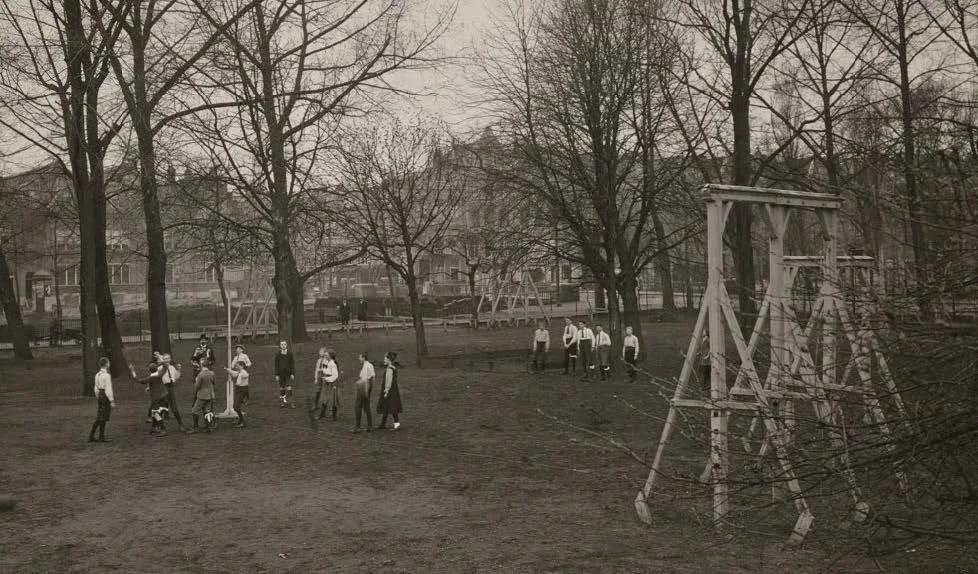
Public Playground No. 1; in the background: Stadshouderkade with Singelgracht. 1900 ca. ©Stadsarchief Amsterdam